
Researchers from North Carolina State University and Johns Hopkins University have developed a revolutionary DNA-based data storage and computing technology that has the potential to transform not just the way information is stored but also the future of warfare. This breakthrough, leveraging the incredible density and durability of DNA, allows for the storage, retrieval, and processing of data in ways that rival and even surpass traditional electronic systems. The implications of this technology are far-reaching, with applications that could reshape industries, enhance cybersecurity, and redefine the way military forces operate in the field.
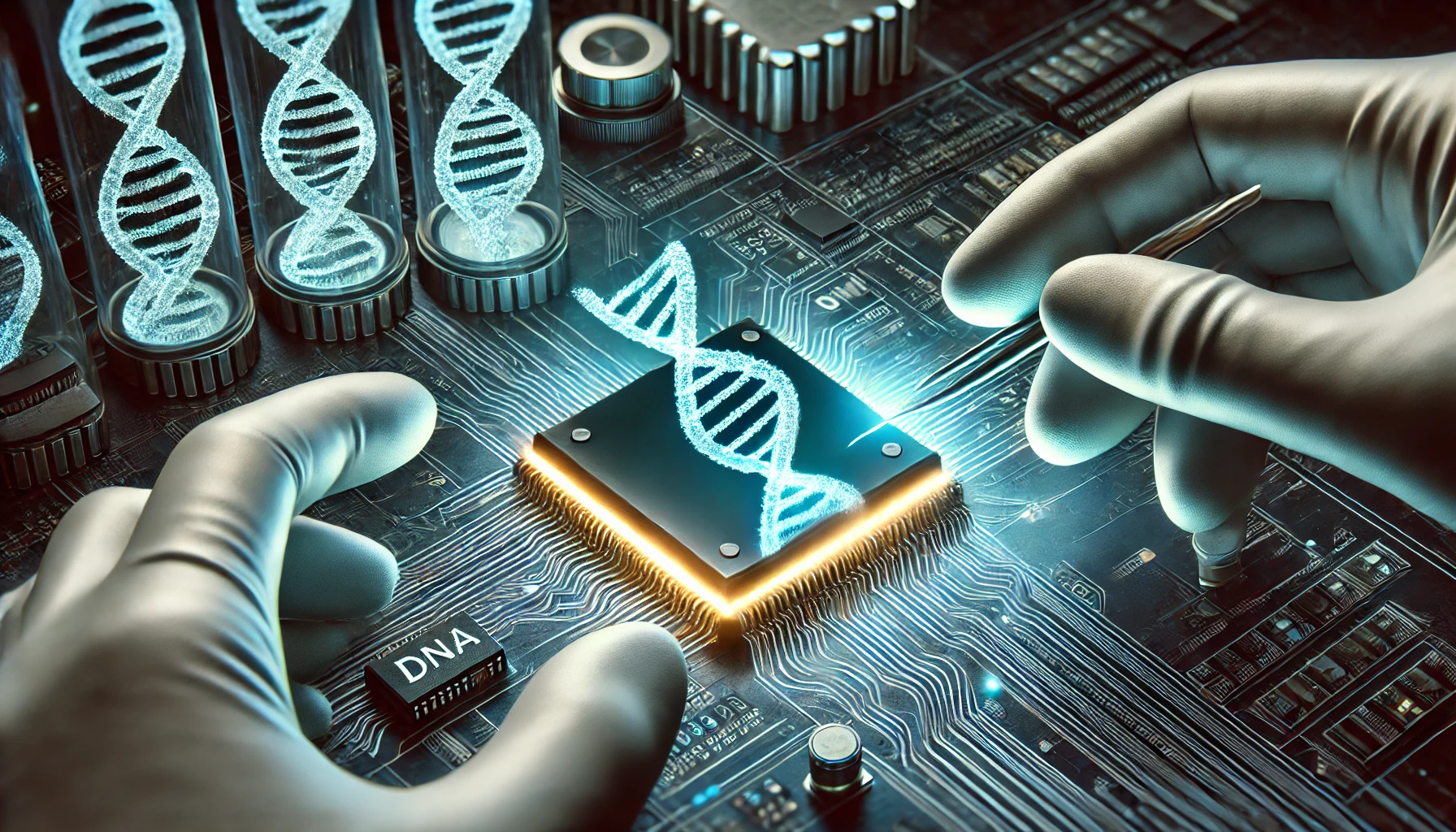
The core of this technology is the use of DNA molecules to store data, which enables remarkable density and longevity. In a world where data is becoming more critical and voluminous, this system offers a solution by storing a thousand laptops’ worth of information in a space no larger than a pencil eraser. The technology goes beyond simple storage—it allows data to be erased, rewritten, and processed, functioning much like modern hard drives but with far greater efficiency and durability. This innovation is made possible by soft polymer structures called dendricolloids, which form nanoscale fibers with high surface areas that hold DNA without compromising data density.
As project leader Albert Keung explained, “In conventional computing technologies, we take for granted that the ways data are stored and processed are compatible with each other.” This new system breaks down barriers by integrating these functions into a single platform. The potential of DNA-based computing to handle long-term data storage, without the risks of degradation or cyber vulnerabilities, opens the door to countless applications.
One of the most profound impacts of this technology will likely be in the military sector. The ability to store massive amounts of data securely and compactly is of critical importance in modern warfare, where information superiority is often the deciding factor in conflicts. Traditional electronic data systems are vulnerable to cyberattacks, environmental degradation, and logistical challenges. DNA storage, on the other hand, could safeguard military intelligence, battlefield communications, and strategic data for millennia, making it virtually impervious to conventional hacking methods and physical damage.
The introduction of DNA-based data systems into the military could enhance the security and reliability of everything from battlefield logistics to advanced autonomous systems. In environments where traditional electronics are at risk—such as in extreme heat, cold, or electromagnetic interference—DNA systems could continue to function without degradation. This would give military forces a significant tactical advantage in hostile or unpredictable environments. Autonomous drones, robots, and AI-driven systems could use DNA computing to process complex algorithms and large-scale data in real time, making split-second decisions that could determine the outcome of missions.
In addition to its potential in autonomous warfare, this technology could also revolutionize the military’s approach to cybersecurity. Cyberattacks have become a constant threat to national security, with adversaries increasingly targeting critical military infrastructure and data systems. DNA-based storage is inherently different from traditional electronic systems, making it far more difficult to penetrate through standard cyberattack methods. This makes DNA storage a natural fit for securing classified military communications and data systems. The military’s reliance on secure and reliable information will only grow, and DNA technology could become the backbone of future cybersecurity strategies.
The implications extend beyond just data storage and computing. This DNA-based technology could support long-term intelligence gathering, archiving, and analysis. Military units on the ground could carry vast libraries of intelligence data in compact formats, reducing the need for vulnerable data transmission systems or bulky hardware. Strategic operations that require constant access to large amounts of data—such as satellite surveillance, intercepted communications, or reconnaissance imagery—could be conducted more securely and efficiently.
In their demonstrations, the researchers have already shown the practical application of their DNA system by solving complex computational problems, including simple Sudoku and chess puzzles. The ability to conduct these computations with a DNA-based system is an exciting prospect for future military applications, particularly as AI-driven systems become more integrated into warfare. As Keung noted, the creation of ENIAC in the mid-20th century sparked a revolution in electronic computing. The team hopes that this DNA-based technology could inspire a similar leap forward in molecular computing.
As warfare becomes increasingly data-driven, the ability to store and process vast amounts of information securely and efficiently will be key to maintaining military superiority. The development of this DNA-based technology could transform how the military handles data in the field, providing commanders with secure, durable, and portable systems for real-time decision-making. Moreover, it will likely play a critical role in safeguarding classified information from cyberattacks, ensuring that sensitive military data remains secure for generations.
This new DNA storage and computing system is not just a scientific breakthrough; it is a glimpse into the future of data security, storage, and warfare. As the world becomes more reliant on technology, the military’s ability to adapt and leverage cutting-edge advancements like this will determine its ability to navigate and succeed in an increasingly complex and volatile global landscape. The fusion of DNA-based systems with modern military operations could provide the strategic edge needed to face the threats of tomorrow.